
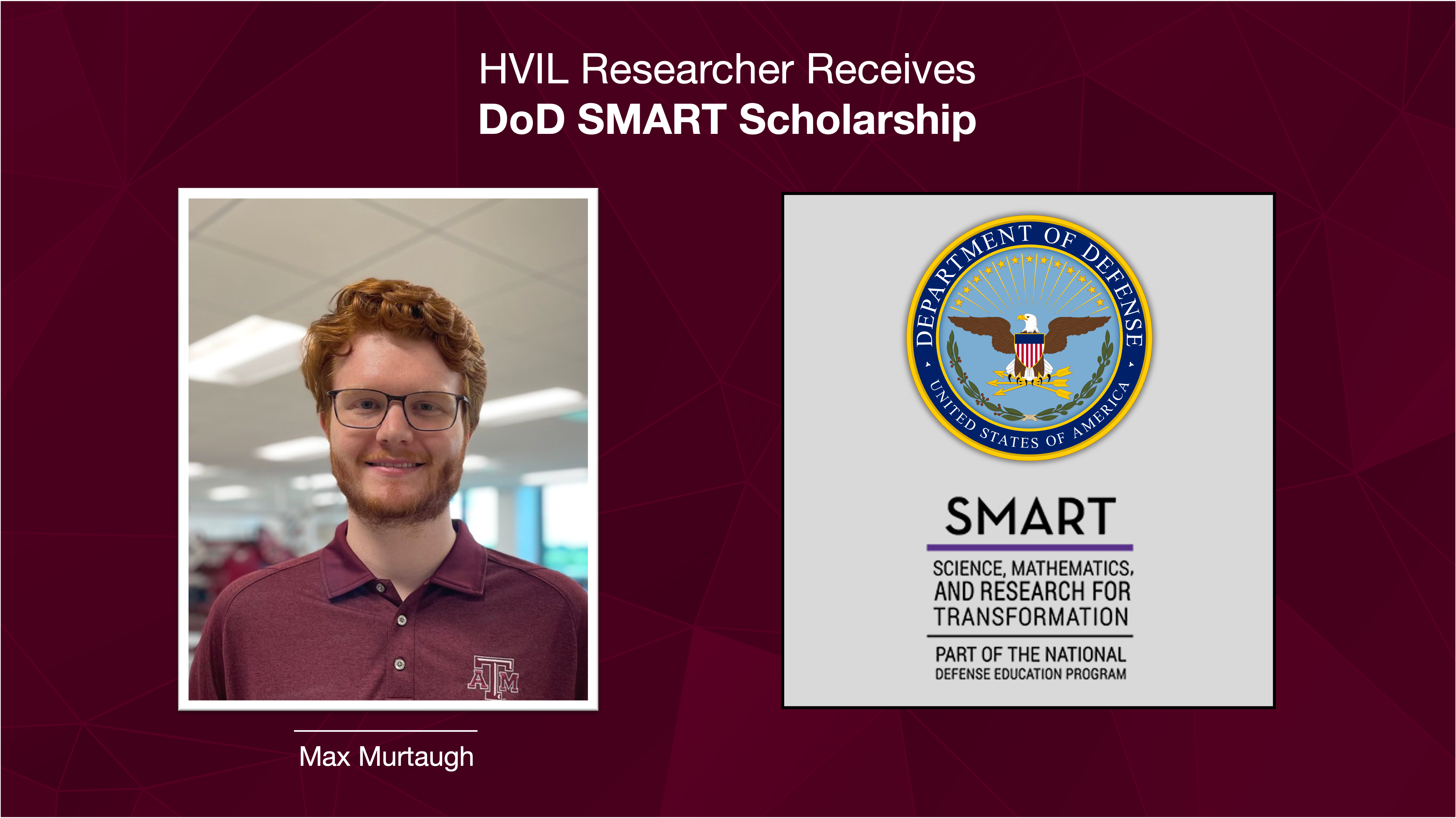
Congratulations to J. Mike Walker ’66 Department of Mechanical Engineering PhD student Max Murtaugh on receiving the Department of Defense’s SMART Scholarship. To learn more about Max, see his bio here.
Congratulations to J. Mike Walker ’66 Department of Mechanical Engineering PhD student Max Murtaugh on receiving the Department of Defense’s SMART Scholarship. To learn more about Max, see his bio here.
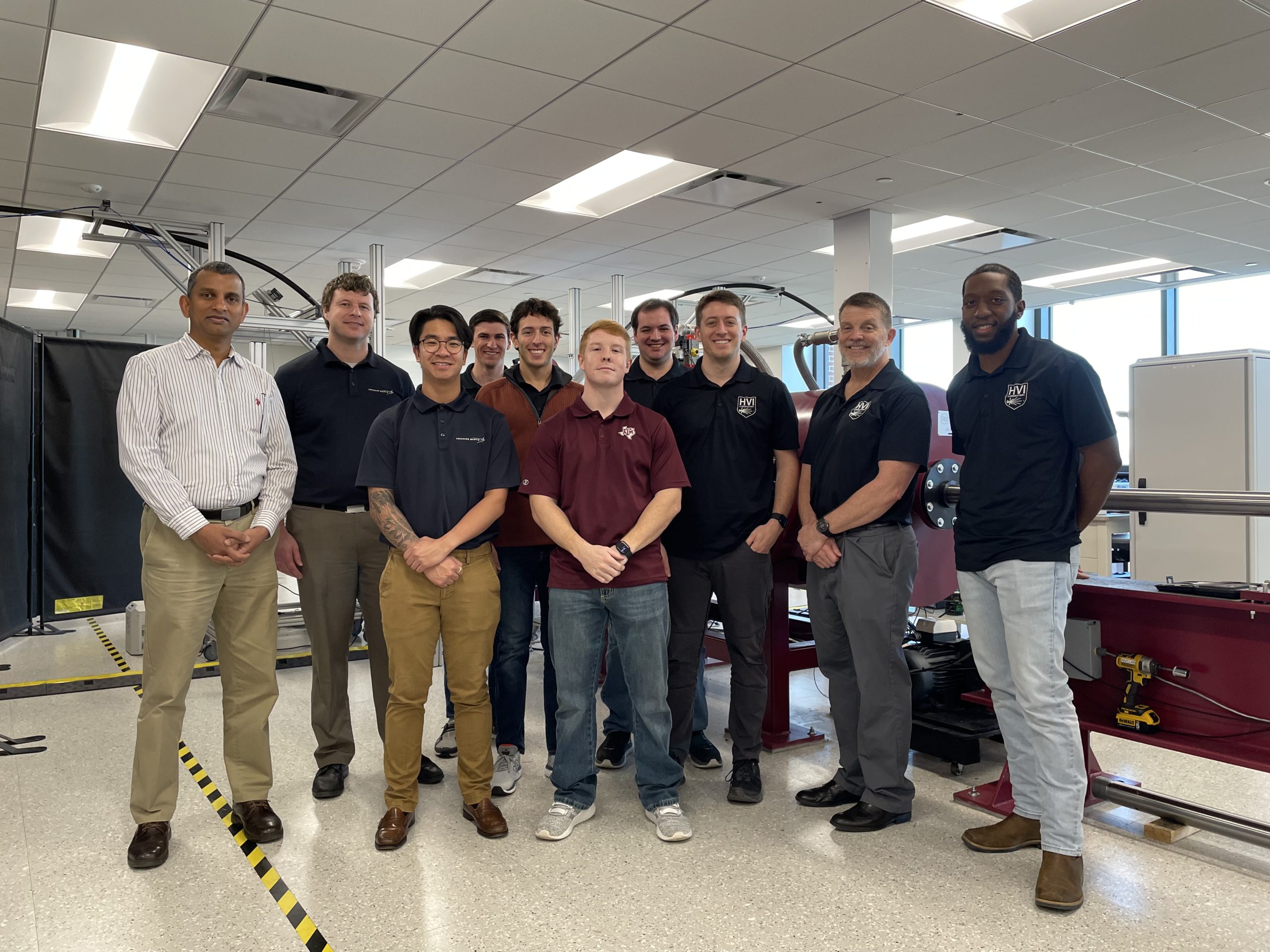
Pictured left to right: Dr. Waruna Kulatilaka, Taylor Broten (LMCO), Peter Yip (LMCO), Nathaniel Bass, Paul Mead, Sidney Davis, Gavin Lukasik, Jacob Rogers, Dr. Thomas Lacy, Khari Harrison.
On January 13th, Lockheed Martin (LMCO) Hypersonics Portfolio Program Manager, Taylor Broten, and Senior Hypersonics Research Engineer, Peter Yip, from the LMCO Advanced Technology Laboratories (ATL) visited the Hypervelocity Impact Lab (HVIL). The purpose of this visit was to discuss internship and full-time employment opportunities with students for internships. Peter and Taylor also observed a series of HVI tests as part of an ongoing LMCO and HVIL research project.
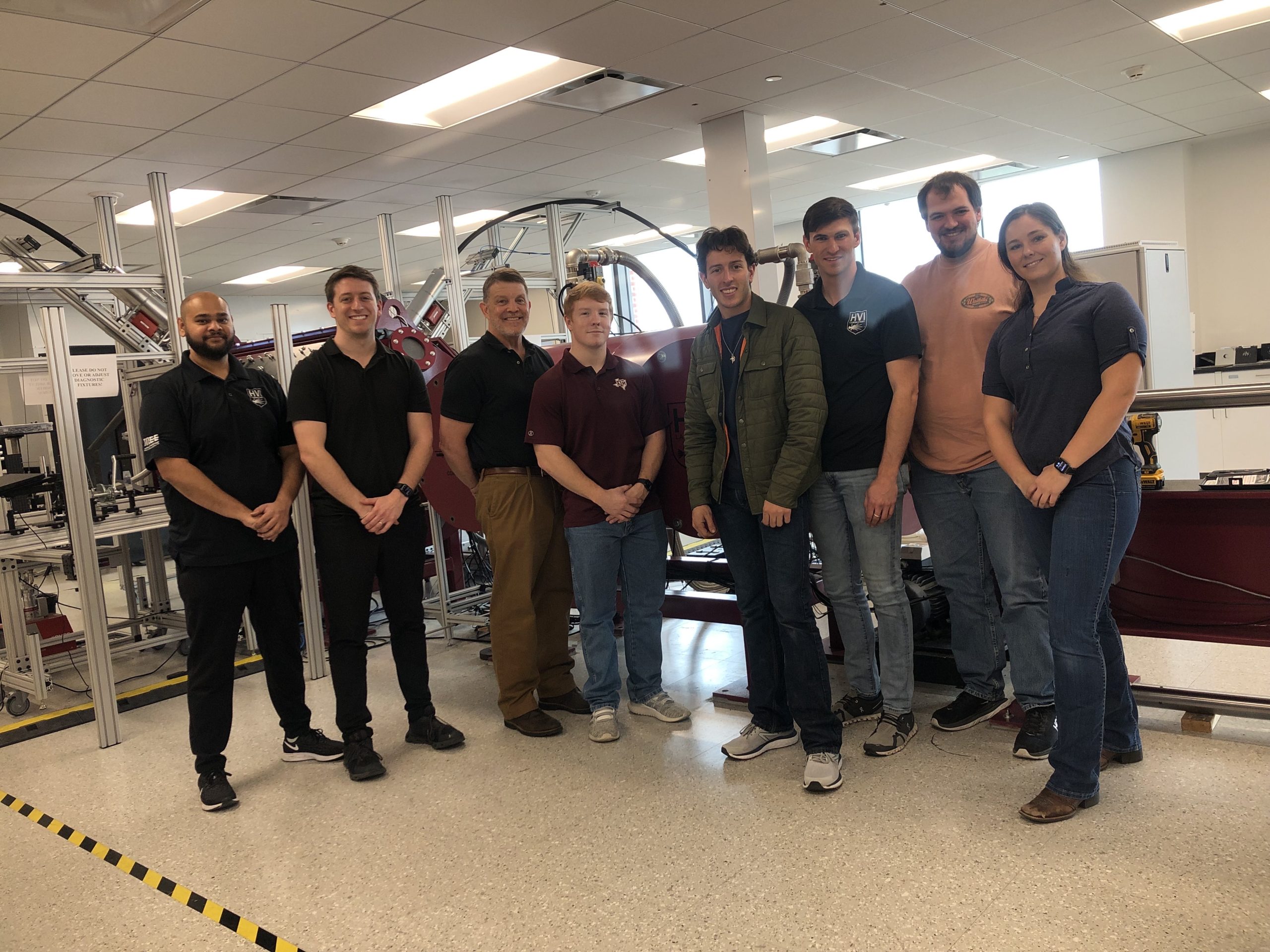
Gravitics Team and the HVIL led by Thomas Lacy at the Center for Infrastructure Renewal.
In February 2023, Gravitics engineers Mark Miner and Jennifer Scozzari visited the Hypervelocity Impact Laboratory (HVIL) at the Center for Infrastructure Renewal Center on the RELLIS campus. The focus of the visit was to perform preliminary testing and discuss future collaborations between Gravitics and the TAMU HVIL.
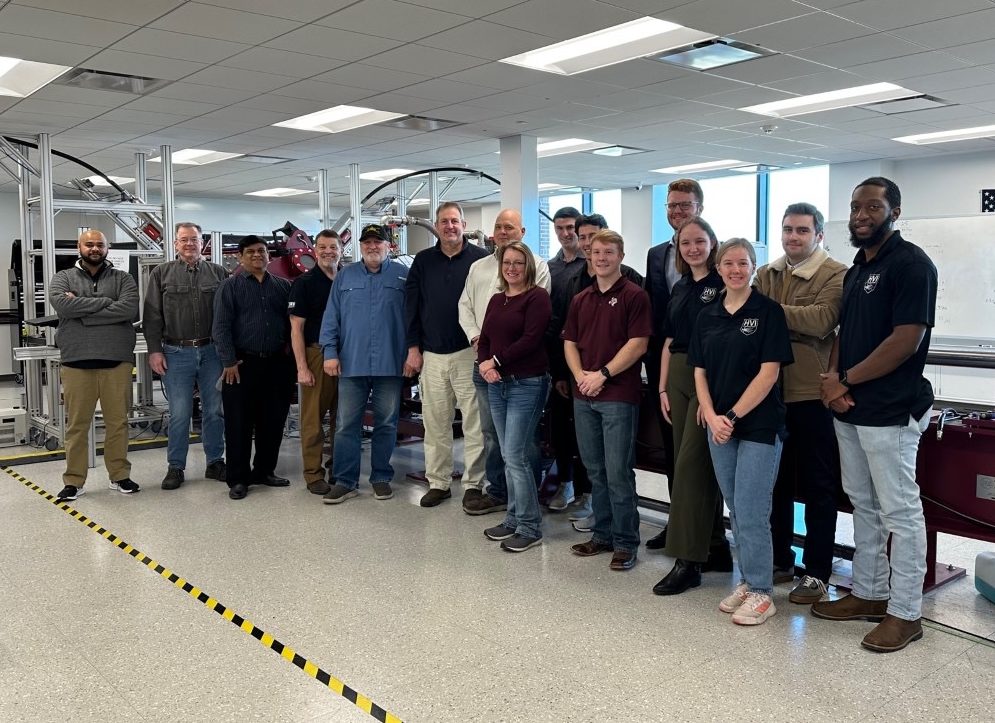
NASA JSC Team and the HVIL led by Thomas Lacy at the Center for Infrastructure Renewal.
In January 2023, NASA JSC team led by Drs. Eric Christiansen, the Hypervelocity Impact Technology (HVIT) lead, and Heather Cowardin of the Orbital Debris Program office toured the Hypervelocity Impact Laboratory (HVIL) at the Center for Infrastructure Renewal Center on the RELLIS campus recently.
The focus was road mapping research collaborations between NASA and the TAMU HVIL related to hypervelocity impact testing and analysis of shielding concepts for micrometeoroid and orbital debris (MMOD) and other hypersonic vehicle applications.
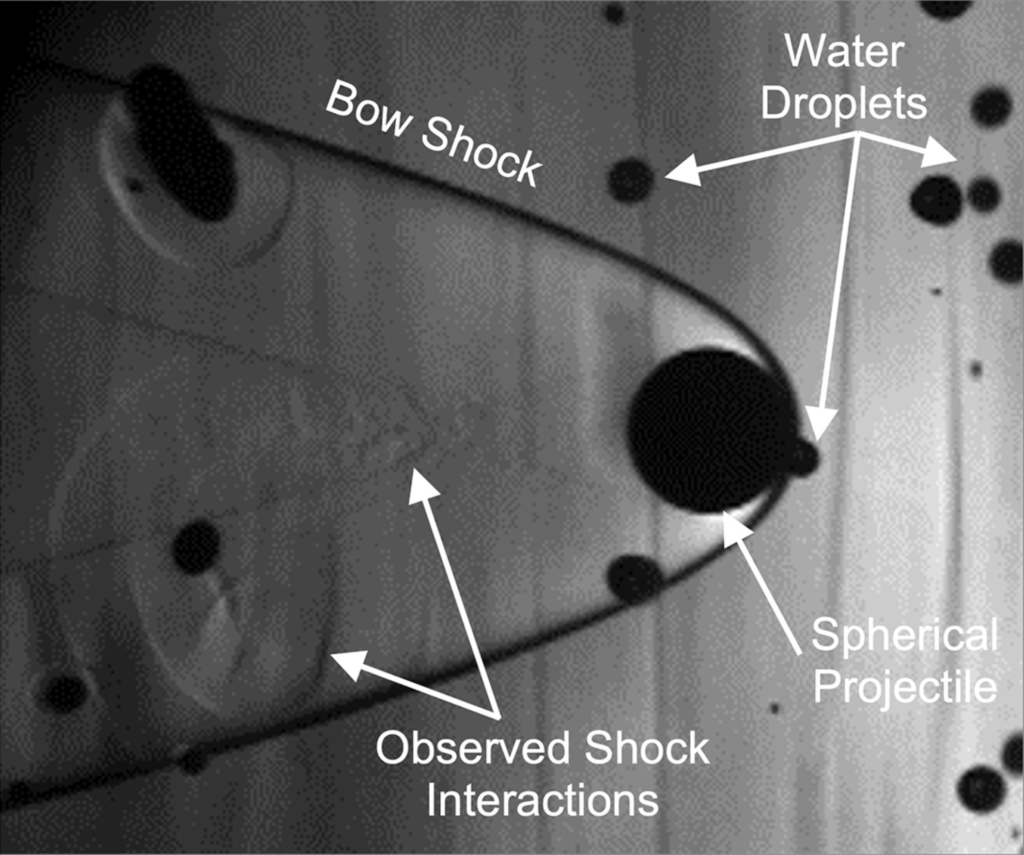
In January, researchers at Texas A&M University developed a suite of state-of-the-art laboratory testing and advanced in-situ optical diagnostic tools for analyzing near-space weather encounters of projectiles traveling at hypersonic speeds. When objects travel at hypersonic speeds through the air, atmospheric weather effects including rain, snow, ice and suspended particles can cause severe damage to surfaces and material systems and influence boundary layers, changing the overall flight path. Solid and liquid particle interactions on materials systems at hypersonic speeds are poorly understood and also difficult to predict by complex computational models. The Texas A&M activities simulated real-world phenomena by firing hypervelocity projectiles through particle fields, as well as impacting simultaneously launched fine particles on selected material targets… read more

Atomic Frontier’s James Dingley visited the Hypervelocity Impact Laboratory (HVIL) in June 2022 to discuss some of the critical challenges in hypervelocity impact research. See the YouTube video below!
Congratulations to J. Mike Walker ’66 Department of Mechanical Engineering graduate student and HVIL research Jacob Rogers on receiving the Aeroballistic Range Association (ARA) Student Award and the Alex Charters Student Scholar Award from the ARA and the Hypervelocity Impact Society (HVIS), respectively (June 2022). He will be attending and presenting at the 71st Meeting of the ARA in Königswinter, Germany (Aug. 2022), and the 2022 Hypervelocity Impact Symposium in Alexandria, Virginia (Sept. 2022). To learn more about Jacob, see his bio here.